
Prefabricated substations are widely used in industrial plants, renewable energy projects, commercial facilities, mining sites, and infrastructure projects. This article explains their main components, working principle, advantages, and common applications.
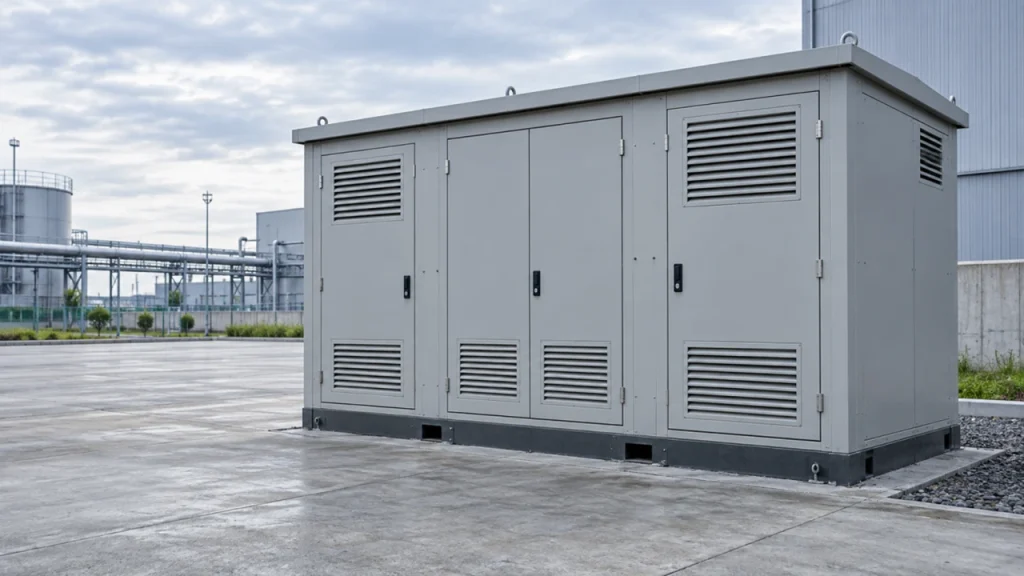
What Is a Prefabricated Substation?
A prefabricated substation typically integrates medium-voltage switchgear, a transformer, low-voltage switchgear, protection and control equipment, and auxiliary systems inside an enclosure or skid-mounted structure.
Most assembly, wiring, and testing are completed in the factory. After delivery, the substation is installed on site and connected to the external power system.
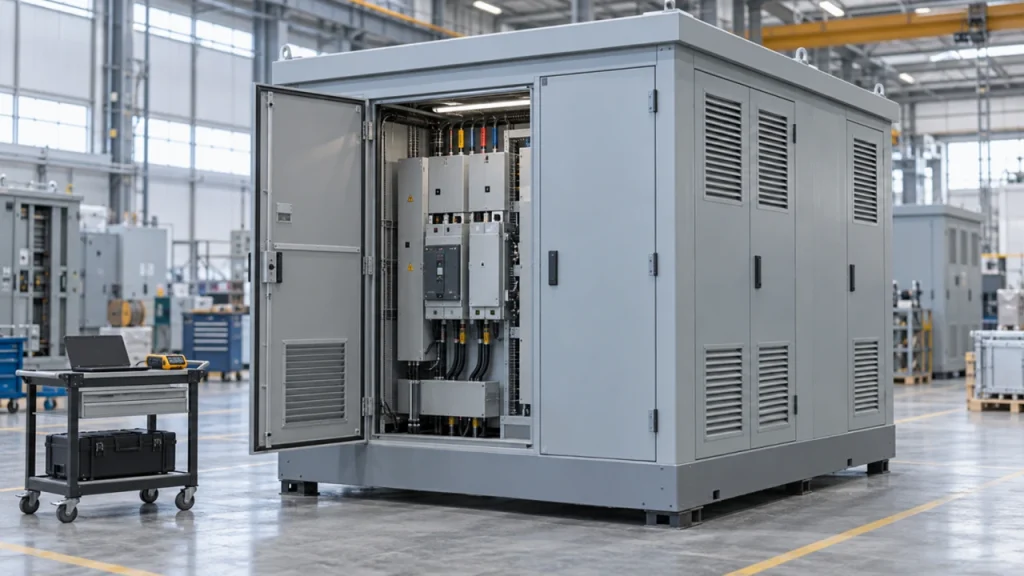
Terms such as compact substation, package substation, unit substation, and skid-mounted substation are also commonly used. Their exact designs may differ, but all follow the same basic concept of integrating electrical equipment into a compact system.
Main Components
The three main electrical components of a prefabricated substation are the MV switchgear, transformer, and LV switchgear.
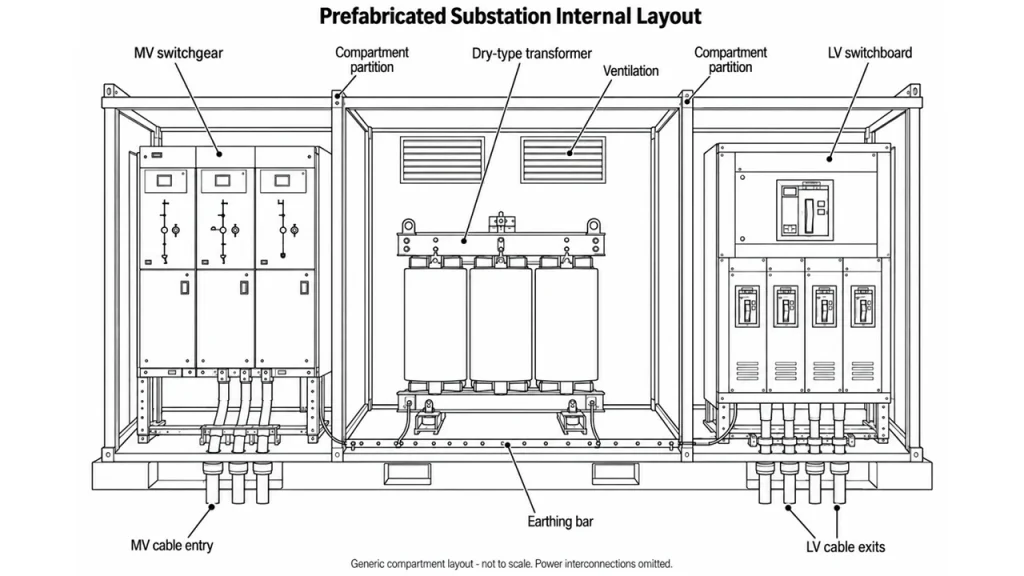
Medium-Voltage Switchgear
The MV switchgear receives power from the upstream network and provides switching, protection, isolation, and measurement.
Depending on the design, it may include circuit breakers, load-break switches, current and voltage transformers, surge arresters, grounding switches, and protection relays.
When an electrical fault occurs, the protection system can detect the abnormal condition and isolate the affected circuit.
Transformer
The transformer changes the voltage level according to the application.
For a typical distribution system, it may reduce voltage from:
10 kV → 0.4kV
In solar and other renewable energy projects, a step-up transformer may instead increase the inverter output voltage before grid connection.
Both oil-immersed transformers and dry-type transformers can be used. Selection depends on capacity, installation environment, fire-safety requirements, cooling conditions, and project specifications.
Low-Voltage Switchgear
The LV switchgear receives power from the transformer and distributes it to different downstream loads.
It normally includes circuit breakers, busbars, meters, protection devices, and other control components.
Different outgoing circuits may supply motors, lighting, HVAC systems, production equipment, pumps, or other electrical loads.
The substation may also include ventilation, air-conditioning, lighting, anti-condensation heaters, grounding systems, fire detection, UPS systems, and remote monitoring depending on project requirements.
How Does a Prefabricated Substation Work?
For a typical step-down system, the power flow is:
MV Source → MV Switchgear → Transformer → LV Switchgear → Loads
Power first enters the MV switchgear, where it is controlled and protected.
It then passes through the transformer, which converts the voltage to the required level.
The LV switchgear receives the transformed power and distributes it to different circuits and loads.
Protection devices continuously monitor the electrical system. If a short circuit, overcurrent, transformer fault, or other abnormal condition occurs, the relevant protection device can disconnect the affected section.
This coordinated system helps maintain reliable power distribution while protecting both equipment and personnel.
Why Use a Prefabricated Substation?
One of the main advantages is reduced on-site work.
Because the major equipment is assembled and connected in the factory, installation at the project site can be simpler than building and integrating a conventional substation entirely on site.
The compact structure also saves space, which is useful for industrial facilities, urban projects, mines, renewable energy plants, and locations with limited installation area.
Factory assembly can improve quality control because wiring, equipment installation, and testing are completed in a controlled environment.
Prefabricated substations are also highly flexible. Voltage level, transformer capacity, switchgear configuration, enclosure design, protection system, and monitoring functions can all be customized according to the project.
Common Applications
Prefabricated substations are widely used in industrial facilities, where they provide power for production equipment, motors, pumps, and other loads.
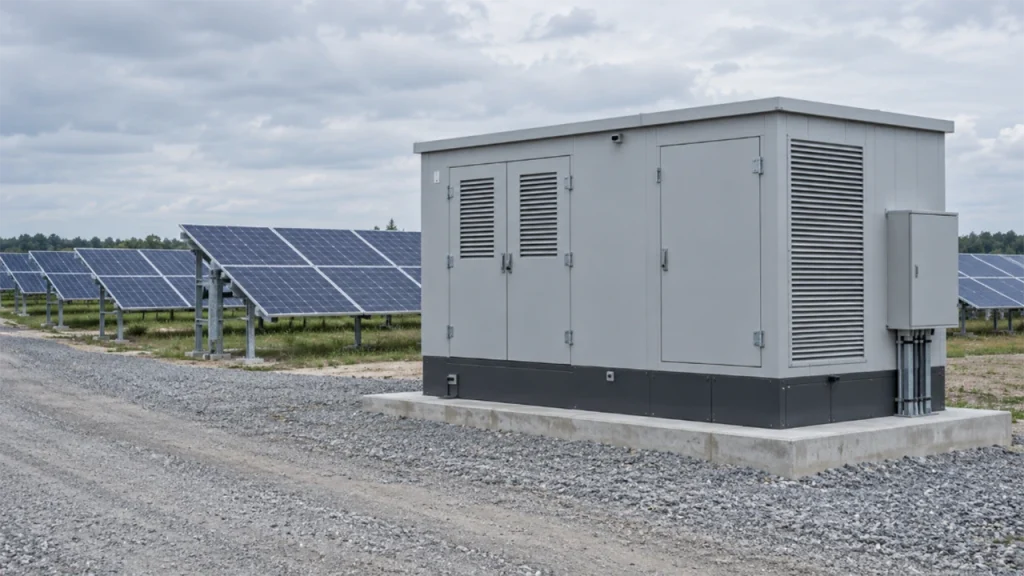
In solar power plants, they can integrate step-up transformers and switchgear to connect inverter output to the medium-voltage network.
For mining and remote projects, skid-mounted designs can provide a compact solution that is easier to transport and deploy.
They are also suitable for commercial buildings and infrastructure projects, including hospitals, data centers, airports, ports, railways, and water treatment plants.
Different applications require different configurations, so the system should always be designed according to the actual electrical and environmental conditions.
How to Select a Prefabricated Substation
Selecting the right substation starts with understanding the project requirements.
Important information normally includes the incoming and outgoing voltage, transformer capacity, frequency, number of circuits, short-circuit level, protection requirements, and installation environment.
A single-line diagram (SLD) is especially useful because it clearly shows the electrical system configuration.
Environmental factors such as altitude, temperature, humidity, dust, corrosion, and indoor or outdoor installation should also be considered.
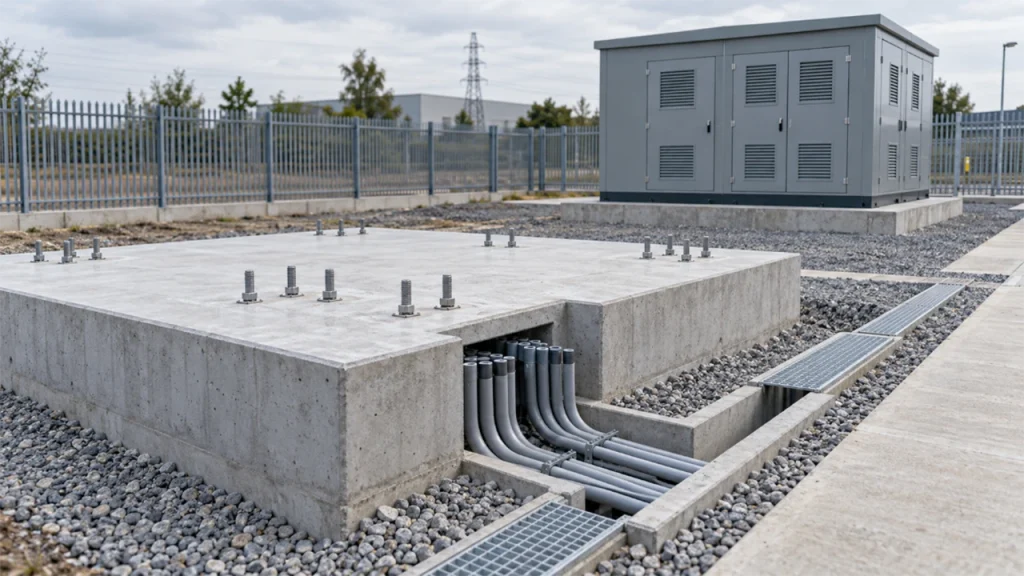
Applicable standards and local grid requirements should be confirmed during the technical design stage.
CMC Electric Prefabricated Substation Solutions
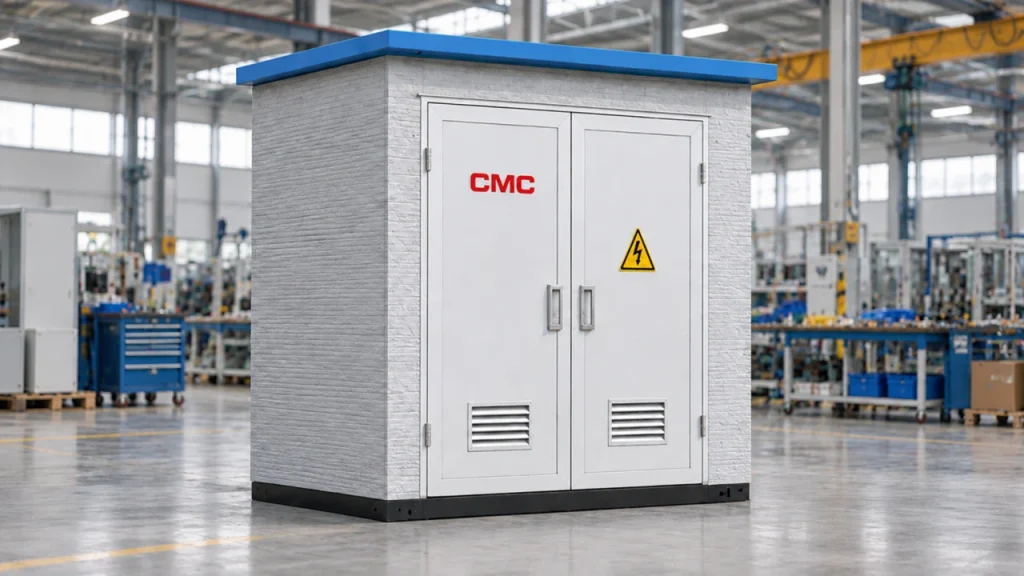
CMC Electric provides customized prefabricated substation solutions integrating transformers, MV switchgear, LV switchgear, protection systems, auxiliary equipment, and enclosure structures.
Solutions can be designed according to the customer’s single-line diagram, voltage level, transformer capacity, load requirements, and installation environment.
CMC Electric supports applications including industrial power distribution, renewable energy, infrastructure, commercial facilities, and other project-based electrical systems.
From technical configuration and engineering design to manufacturing, factory testing, shipment, and technical support, the complete system can be coordinated according to project requirements.
Conclusion
A prefabricated substation combines key electrical equipment into a compact, factory-integrated power distribution system.
Its typical power flow is simple:
MV Source → MV Switchgear → Transformer → LV Switchgear → Loads
Its main advantages include compact design, reduced on-site installation, factory quality control, and flexible configuration.
For industrial, renewable energy, mining, commercial, and infrastructure projects, a properly designed prefabricated substation can provide an efficient and reliable power distribution solution.
If you are planning a project, providing your single-line diagram, voltage level, transformer capacity, load information, and installation conditions will help CMC Electric prepare a more suitable technical solution.